The History of Birmingham
Early History
The Saltley handaxe is on display at the Birmingham museum and it is believed to have been used 500,000 years ago. Archaeological evacuations have shown significant prehistoric activity in the Birmingham area. This includes the Neolithic Barrow Mound in Kingstanding and the burnt mounds in Sutton Park and other parts of Birmingham. Evidence has suggested these burnt mounds may have used as a type of sauna by prehistoric peoples.
During the Roman period, Metchley Fort was built in AD 48. This is close to the present day Queen Elizabeth Hospital. This included a small civilian settlement adjoining the fort called a vicus. Icknield Steet was associated with this fort and a well preserved section of this roman road can be seen in Sutton Park.

Medieval Birmingham
At the time of the Domesday Survey in 1086 there was a settlement of around 50 people close to the modern day Bullring. There was a small timber framed manor house surrounded by a moat and fed by the River Rea.
William de Bermingham was the first clear Lord of the Manor and this in the reign of Henry I (1100-1135). Peter de Bermingham succeeded Wililiam and Birmingham was one of the poorest manors in the county of Warwickshire and had little woodland. To increase economic activity, Peter petitioned King Henry II for a market charter, to hold a cattle and food market in the grounds of his castle. A royal charter was given by Henry II in the middle of the 12th Century. The marketplace was laid out where the Bullring is now. The market became the most successful in England, encouraging people to move to the area. The population had risen to 1500 by the year 1300.
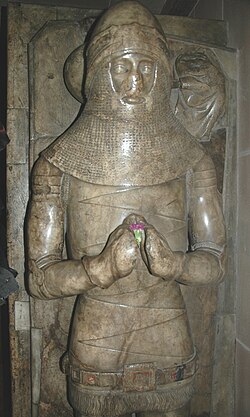
Multiple churches, a priory and guilds were established in Medieval Birmingham. St Martin’s in the Bull Ring Church was established in 1250. Sir William de Bermingham was buried there in circa 1325 and Sir John de Bermingham in 1380. Both memorials can still be seen.
The Guild of the Holy Cross was founded in 1392. It maintained priests and a chantry at the church. They also had almshouses, maintained a bridge over the River Rea in Deritend and had a hall on New Street(laid out in the late 13th century). They were suppressed by King Edward VI and the funds used to found King Edward’s Grammar School in 1552, in there hall. There are multiple King Edward Grammar Schools across the city now.
The Priory of St Thomas of Canterbury was 1st recorded in 1286. It was built in present day Old Square in Central Birmingham. St John’s Church, Deritend was built in 1380 as a chapel of ease for Aston Church. This was supported by the Guild of St John. The current Old Crown pub was the hall for this guild. This is the only secular building from Medieval Birmingham still standing. All religious guilds and the priory collapsed between 1536 and 1547
There were multiple visits of the King to Birmingham in this period and the city grew in prominence. By 1332, Birmingham was the 3rd largest town in Warwickshire. Coventry was at this time the 4th largest urban area in the UK.
There was a considerable amount of industry in Birmingham. It benefited from being free from strict manorial control and trade guilds. This allowed Birmingham to prosper. Deritend Ware pottery was made and there was the development of different trades. This was mainly textiles, tile making, leather and iron working.
There was known to be nailers in Harborne, bladesmiths in Witton and scythesmiths in Erdington. Iron mongers making bills for Royal Armouries. Metal working flourished due to local resources and freedom of the settlement.
Also there was the development of the jewellery trade. Goldsmiths were noted to be in Birmingham in the medieval period.
The De Birmingham family due to a feud, lost the manor in 1536. Soon after, Birmingham had no Lord and would never have one again. This allowed for a high degree of social and economic freedom.
In 1586, William Camden described Birmingham as the following: - "swarming with inhabitants, and echoing with the noise of the anvils, for here are great numbers of smiths and of other artificers in iron and steel, whose performances in that way are greatly admired both at home and abroad"



Civil War
During the English Civil War King Charles I stayed in Aston Hall. On 18th October 1642 he stood on the Bowl Barrow in Kingstanding and reviewed the troops. The Battle of Birmingham took place in April 1643 Camp Hill and the Royalists led by Princess Rupert won against a militia force in Birmingham. In Christmas 1643, Aston Hall was under siege by Parliament forces and was hit by a cannonball. The damage can still be seen today!

Midlands Enlightenment
During the 2nd half of the 18th century there was the Midlands Enlightenment and this partly developed in Birmingham. The Lunar Society started in approximately 1765 and was a group of individuals who met together for dinner when the full moon occurred. Venues included Soho House and Great Barr Hall. Membership included Matthew Boulton, Erasmus Darwin, William Withering, James Watt and Samuel Galton Jnr. This society is remembered by nine moonstones in the grounds of a supermarket in Queslett, North Birmingham.There was also Freeth’s Coffee House on the corner of Bell St and Lease Lane(both now covered by The Bullring). This was ran by John Freeth(2nd half of 18th century) and was a well known meeting place in Georgian England. The Birmingham Book Club met there from 1758 and there is a painting in the Birmingham Museum from 1792.
The engineering and manufacturing firm Boulton and Watt was founded in 1775. James Watt had developed the steam engine and patented a new design with a separate condenser. Initially based at Soho Manufactory they started to make steam engines from Soho Foundry(now Avery Weigh-Tronix) in 1795. The Smethwick Engine was produced by them in 1779 and is in the Thinktank Museum. Soho Manufactory was an early factory and operated from 1766 to 1848. It pioneered mass production and the use of an assembly line.
Dr William Withering experimented with foxgloves at Birmingham General Hospital(opened in 1779) and helped patients with a condition called dropsy. He wrote a book in 1785 and this led onto the use of foxglove and is the basis for the medication digoxin.John Baskerville was active in 18th century Birmingham and became a respected printer and type designer(Baskerville typeface). A demonstration slab is owned by the Library of Birmingham.


19th century Birmingham up until World War 2
The first two long-distance rail lines in the World came into Birmingham at Curzon St Station by 1838. Thomas Attwood founded the Birmingham Political Union. Large rallies on Newhall Hill(modern Newhall Street) led to the 1832 Reform Act. This allowed for equal representation of the people. Rowland Hill worked at the Assay Office in Birmingham and created the 1st modern postal service in 1839.
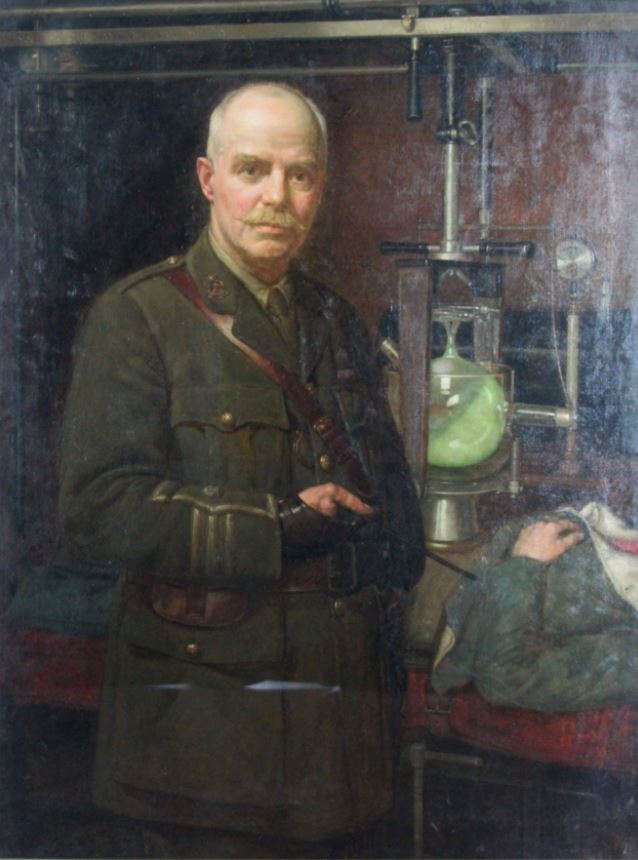
Dr John Hall-Edwards(pictured to the right) was born and educated in Birmingham. He attended Queens College Medical School in the city. He was a pioneer radiologist and did one of the 1st clinical X-rays in the World in Birmingham in 1896.
Alexander Parkes was born in Birmingham and worked for a time at the Elkington Works, near present day Newhall Street. He invented Parkesine, the first man-made plastic in the World, whilst working in the Jewellery Quarter in 1855/1856.
World World 2 and Beyond
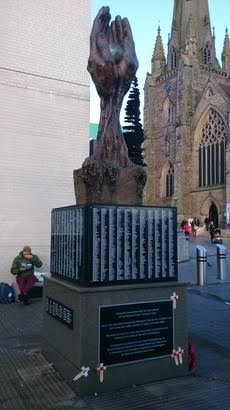
Birmingham was heavily bombed during World War 2. The Birmingham Blitz lasted from August 1940 until April 1943. There was 77 actual air raids. Over 2000 civilians were killed and many buildings destroyed. There was many industrial targets such as the Spitfire factory at Castle Bromwich, Austin, Rover and the Birmingham Small Arms Company.
After WW2 Birmingham was extensively rebuilt and redeveloped. The population in 1951 was 1.1 million and this is similar to now.
By 1961 household incomes in the West Midlands significantly exceeded London and the South East, perhaps by as much as 13%. Further growth appeared to be stunted by successive central governments. Growth was encouraged in Northern England and Wales. However, as late as 1976 the West Midlands(with Birmingham as its principal economic driver), still had the highest GDP of any in the UK outside the South East. However, within five years it was the lowest in England. Birmingham's economy collapsed due to the recession in the early 1980s.